How Amir Runs Bella Ciao Amsterdam Without the Sunday-Night Scheduling Scramble
Schedule shifts, manage swaps, track real hours, and send payroll without the weekly admin headache.
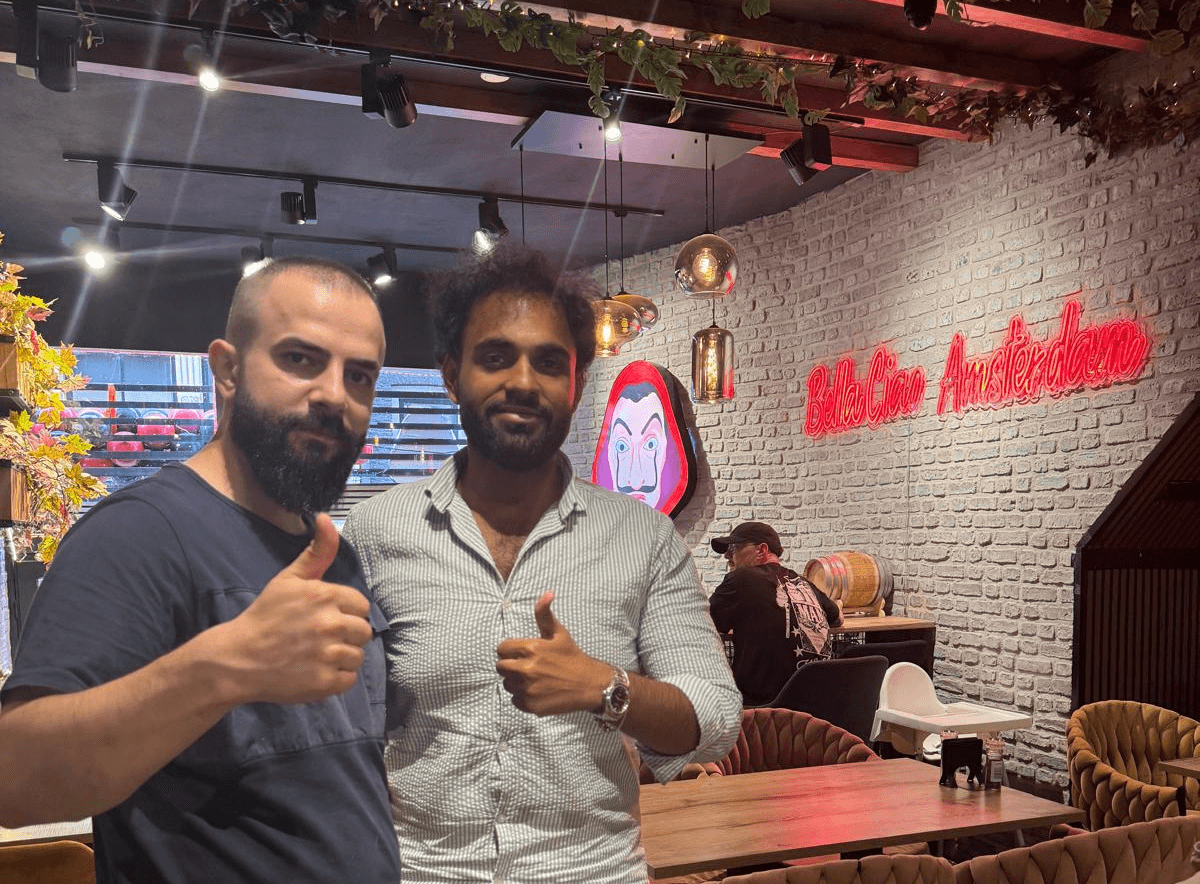
Ask any restaurant owner what eats their week and the answer is rarely the food. It's the rota. Who's in on Friday, who called in sick, whether the kitchen is covered when two servers both booked the same weekend off, and whether all of it adds up to hours that payroll can actually process. For Amir, who runs Bella Ciao in Amsterdam, that used to mean a laptop, a spreadsheet, and a Sunday evening he'd rather have spent anywhere else.
Today the schedule for the coming week is built in about twenty minutes, his team sees it on their phones the moment it's published, and the hours flow straight into payroll without him re-typing a single number. Here's what changed.
The problem wasn't the software — it was the seams
Bella Ciao isn't a huge operation, but it has all the moving parts of one: a floor team, a kitchen, part-timers with study timetables, and the unpredictable rhythm of a city-centre restaurant where a sunny Thursday can double covers with no warning.
Before Session Pilot, Amir wasn't working without tools. He was working with too many. A spreadsheet for the rota. A WhatsApp group for swaps and sick calls. A separate step at the end of the month to tally everyone's hours before sending them to the accountant. Each of those on its own was fine. The problem was the seams between them, every handoff was a place for a mistake to slip in, and every mistake cost him time he didn't have.
The classic failure looked like this: someone swapped a shift in the WhatsApp group, Amir missed it, the spreadsheet stayed wrong, and at month-end the hours didn't match what the person actually worked. Sorting that out meant scrolling back through chat history to reconstruct what really happened.
One place for the whole week
The first thing Session Pilot did was collapse those seams into a single view. Amir builds the week's schedule in one place — floor and kitchen, full-timers and students, all visible together. He can see at a glance where he's thin and where he's overstaffed before the week even starts, instead of finding out on the night.
Because the product is built for horeca specifically, it speaks Amir's language rather than a generic "employee shift" abstraction. Availability, roles, and the reality that a slow Monday and a rammed Saturday need completely different staffing are baked in, not bolted on.
The team sees it, and swaps handle themselves
The moment a schedule is published, everyone at Bella Ciao sees it on their phone. No screenshot in a group chat, no "which version is the latest one?" When someone needs to swap or flag they can't make a shift, it happens inside the system, and Amir sees the change reflected in the schedule immediately, not buried three days deep in a chat thread.
That single shift did more for Amir's stress levels than almost anything else. The rota and the reality of who's actually working are now the same thing.
Clock in, clock out — the gap between planned and paid closes
A schedule is a plan. What people actually work is something else. A prep cook comes in half an hour early to get ahead on a busy night. A server stays forty-five minutes past close because a big table lingered. Someone covers the tail end of a shift for a colleague who had to leave. Every one of those is real worked time, and in the old setup every one of them was a small negotiation Amir had to remember, adjudicate, and manually adjust.
With clock in and clock out, the team taps in when they start and out when they finish, and Session Pilot records the actual hours against the shift. Amir can see planned versus worked side by side, where the night ran long, where someone left early without anyone having to argue their case from memory. It also quietly solved the smaller frictions: no more guessing whether a late start was five minutes or twenty, no more "I definitely stayed till eleven" conversations with no way to check.
For Amir it does two jobs at once. It gives him an honest read on labour: he can see that Fridays consistently run over and staff accordingly, or spot that a shift is padded and trim it. And it means the hours he pays are the hours actually worked, not the hours he thought he scheduled three weeks ago.
Hours become payroll without the re-typing
This is the part Amir describes as the biggest relief, and it's where the clock data pays off. At the end of the period, the hours everyone worked are already in the system — accurate, because they come from real clock in/clock out data, not a month-end reconstruction from a spreadsheet and a chat thread. Session Pilot exports those hours in a format payroll can use directly, so the tally-it-all-up evening simply disappeared.
For Amir, that's not just saved time. It's fewer errors, fewer awkward "your paycheck was short" conversations, and a clean handoff to whoever does the numbers.
Pricing he doesn't have to decode
One reason Amir moved in the first place: he could actually understand what he was paying. Session Pilot is a flat €4 per employee per month, all-in. No tiered add-ons that unlock the feature you assumed was included, no per-integration surcharge, no surprise line items. For a venue Bella Ciao's size, that predictability matters as much as the features, Amir knows exactly what next month costs, and it scales cleanly as he hires.
What Amir actually got back
The honest headline isn't a flashy percentage. It's this: Amir got his Sunday evening back, and he got a week that runs on one source of truth instead of four.
The schedule takes minutes, not an evening.
The team always knows where they stand.
Swaps and sick calls update the rota automatically instead of living in a chat thread.
Clock in/clock out captures actual worked hours, so planned and paid finally match.
Hours flow into payroll without manual re-entry.
The bill is a number he can predict.
None of that is glamorous. All of it is the difference between a restaurant that runs Amir and a restaurant Amir runs.
Bella Ciao Amsterdam uses Session Pilot for scheduling, shift management, and payroll export. If you run a horeca venue and recognise the Sunday-night scramble, that's exactly the problem Session Pilot was built to remove.


